Blog Summary
- Wild turkeys visit yards in search of food, especially seeds, berries, and acorns, and they prefer properties near mature forests and water.
- Turkeys rarely pose a serious threat to people, but they can damage gardens, lawns, cars, and roofs, and spread avian pox to backyard chickens and songbirds.
- Simple steps like removing food sources can help in the moment, but turkeys often return once the pressure stops.
- Wild turkeys are protected under state gamebird laws, so removal requires a DNR depredation permit.
- Varment Guard uses humane, harassment-based deterrents to keep turkeys moving along and away from your home.
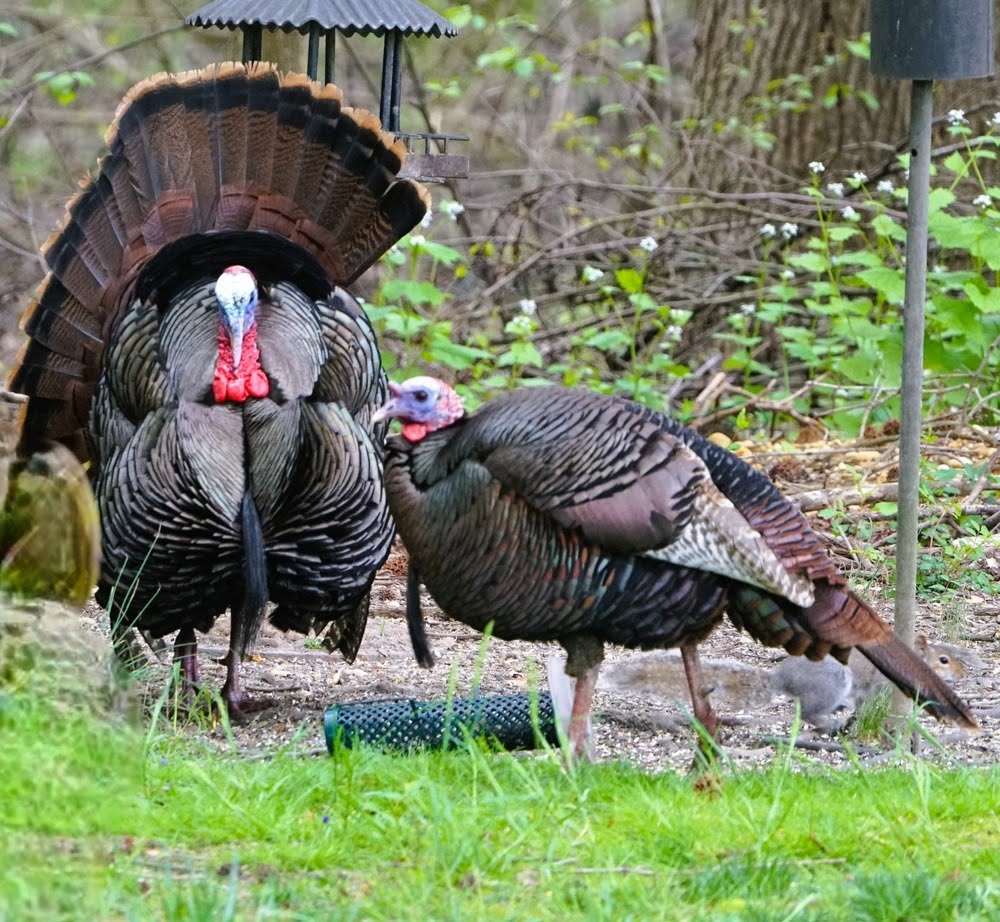
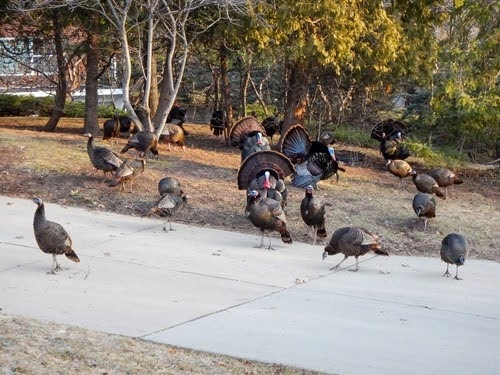
Wild turkeys can be a nuisance for homeowners. In the fall, turkeys may flock into your yard looking for food and water sources. These birds are quite strong and can damage young plants, patio furniture, decorative items, or small feeders. Here’s why wild turkeys are in your yard and how you can keep them away.
Why Are There Wild Turkeys in My Yard?
Wild turkeys are in your yard looking for food. In the early fall, turkeys tend to feed on seeds, insects, and berries before switching over to acorns during the winter. Because of this, berry bushes and oak trees are a main attraction for these birds.
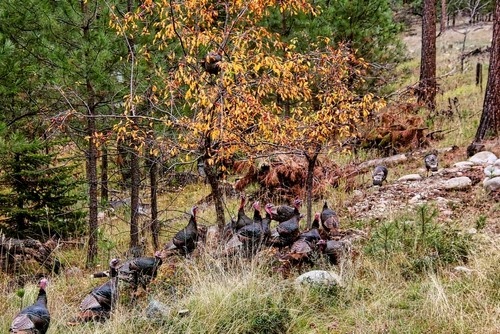
Living near a forest and a water source can also drive wild turkeys into your yard. They prefer mature forests because they like to roost in broad-branched trees. Additionally, they rely on tall, hardwood trees for coverage at night.
Are Wild Turkeys Dangerous?
Wild turkeys rarely pose a serious threat to people, but they can be bold. Turkeys that have adapted to suburban neighborhoods often lose their natural fear of humans. They may chase, peck at, or follow people and pets, especially during spring breeding season when males defend their territory. Give them plenty of space and never feed them, since handouts teach turkeys to approach people.
For most homeowners, the bigger concern is property damage. A flock of wild turkeys can:
- Scratch up mulch beds, lawns, and gardens while foraging for seeds and insects
- Eat and trample seedlings, vegetables, and berry plants
- Peck at cars, windows, and other reflective surfaces, mistaking their own reflection for a rival turkey
- Leave droppings on decks, patios, driveways, and outdoor furniture
- Roost on roofs and railings, where their weight can loosen shingles and damage gutters (adult males can weigh over 20 pounds)
Do Wild Turkeys Carry Diseases?
Wild turkeys can carry avian pox, a viral disease that causes wart-like growths on the bird's head, legs, and feet. Avian pox does not infect people. However, it spreads easily between birds through mosquitoes, direct contact, and shared surfaces like feeders, birdbaths, and perches. That makes it a real concern if you keep backyard chickens or maintain bird feeders, because a visiting flock can pass the virus to your poultry or songbirds.
Turkeys may also carry internal and external parasites, such as mites and lice. Their droppings can harbor bacteria like Salmonella, so wear gloves when cleaning up after a flock and wash your hands afterward.
How to Keep Wild Turkeys Out of Your Yard
Simple Steps to Discourage Turkeys
Wild turkeys respond to signs of dominance, so a few simple actions (taken from a safe distance) can make your yard less inviting:
- Make your presence known. Waving your arms, making loud noises, or blowing a whistle can send turkeys running.
- Remove food sources. Clean up spilled bird seed, fallen acorns, and berries so your yard has nothing to offer a hungry flock.
- Use water. A spray of water from a hose can encourage turkeys to move along.
These steps can help in the moment, but turkeys that have grown comfortable in a neighborhood often return once the pressure stops. For lasting results, a professional deterrent plan is the more reliable solution.
How Varment Guard Deters Wild Turkeys
The specialists at Varment Guard take a humane, harassment-based approach. Rather than removing turkeys, we use a combination of techniques that encourage the flock to move along and stay away:
- Holographic bird deterrents: Solar-powered or wind-driven devices broadcast an erratic display of reflected light across your property, which turkeys find unsettling.
- Noise deterrents: Sound-based methods reinforce the message that your yard isn't a safe place to feed or roost.
- Water deterrents: Targeted water spray adds another layer of pressure to keep turkeys from settling in.
Used together, these methods are far more effective than any single tactic, because turkeys quickly learn to ignore a deterrent that never changes.

Wild Turkeys Are Protected by Law
Wild turkeys are protected under state gamebird laws. Their eggs, young, and adults cannot be removed without a depredation permit issued by the state DNR. Attempting removal on your own can lead to fines, which is one more reason to rely on a licensed wildlife professional who understands local regulations.
Get Rid of Wild Turkeys With Varment Guard
If wild turkeys are damaging your yard, roosting on your roof, or making your outdoor space unwelcoming, Varment Guard is here to help. Our specialists will assess your property and put a deterrent plan in place to keep turkeys moving along. Contact the trained specialists at Varment Guard or call 800-793-8169 today.