Blog Summary
Thick foliage, accessible garbage, and lawn grubs draw skunks to your yard, where they often burrow under porches, decks, and sheds. Removing hiding spots, securing garbage, and cleaning up food sources makes your property less appealing. For skunks already on your property, Varment Guard safely and humanely removes them and seals off their shelter to keep them from returning.
Skunks don't wander into yards by accident. They settle near homes that offer easy food and sheltered spots to burrow, like the space under a porch, deck, or shed. Here's what attracts skunks to your yard, when they're most active, and how to keep skunks away from your house.
Why Are Skunks Near My Home?
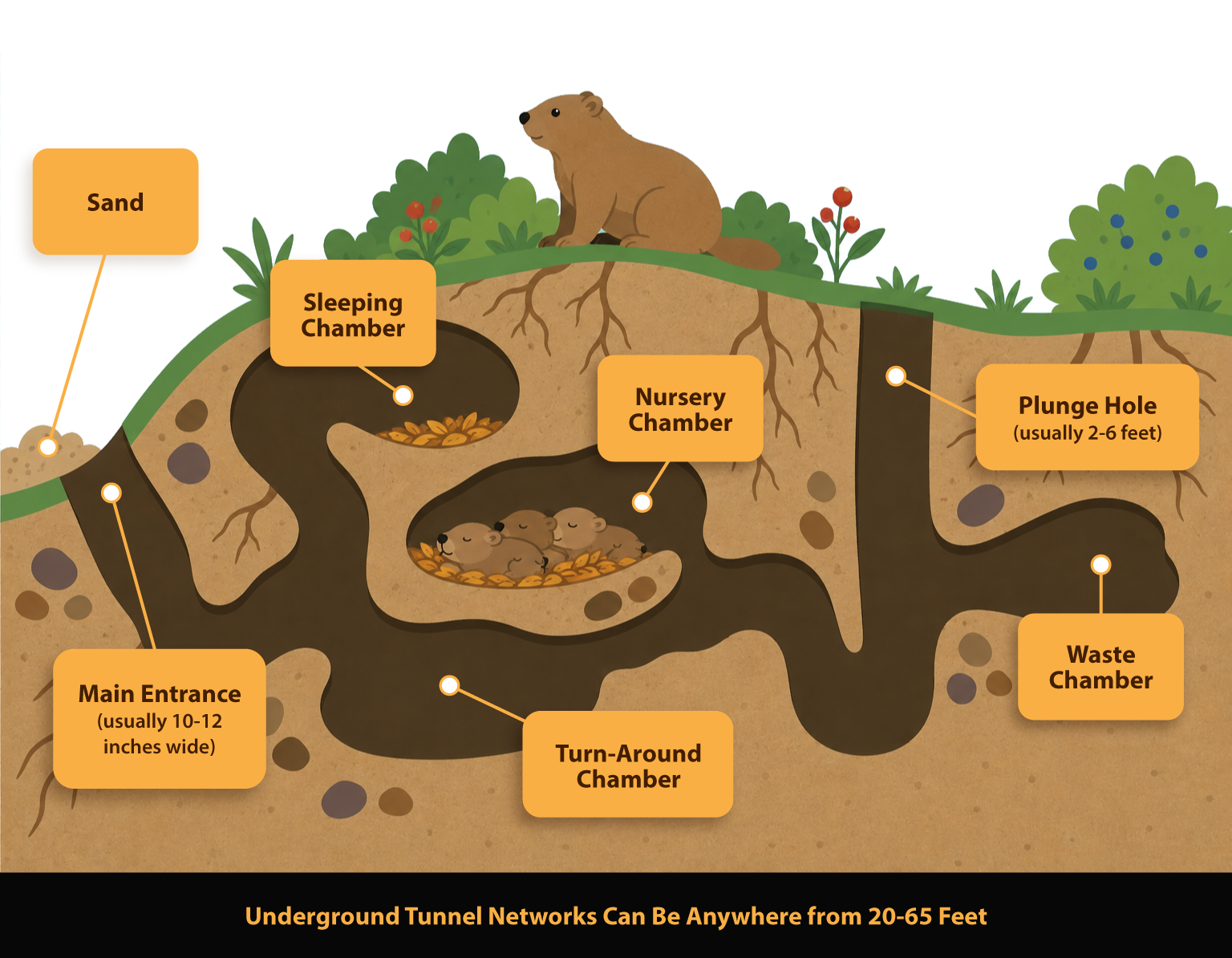
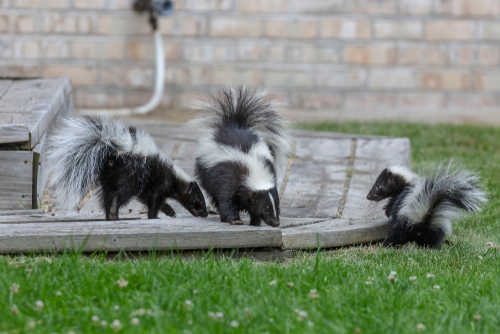
Skunks live in underground burrows, either digging their own or taking over dens abandoned by other animals. Once they settle in, they rarely travel far to find food. If you're seeing a skunk around your home often, it's likely living on or near your property. Skunks build burrows beneath existing structures in order to use those structures for natural cover. Unfortunately, their burrow is probably underneath your porch, deck, or shed.
What Attracts Skunks to Your Yard?
.png?r=6feveymTF/4=)
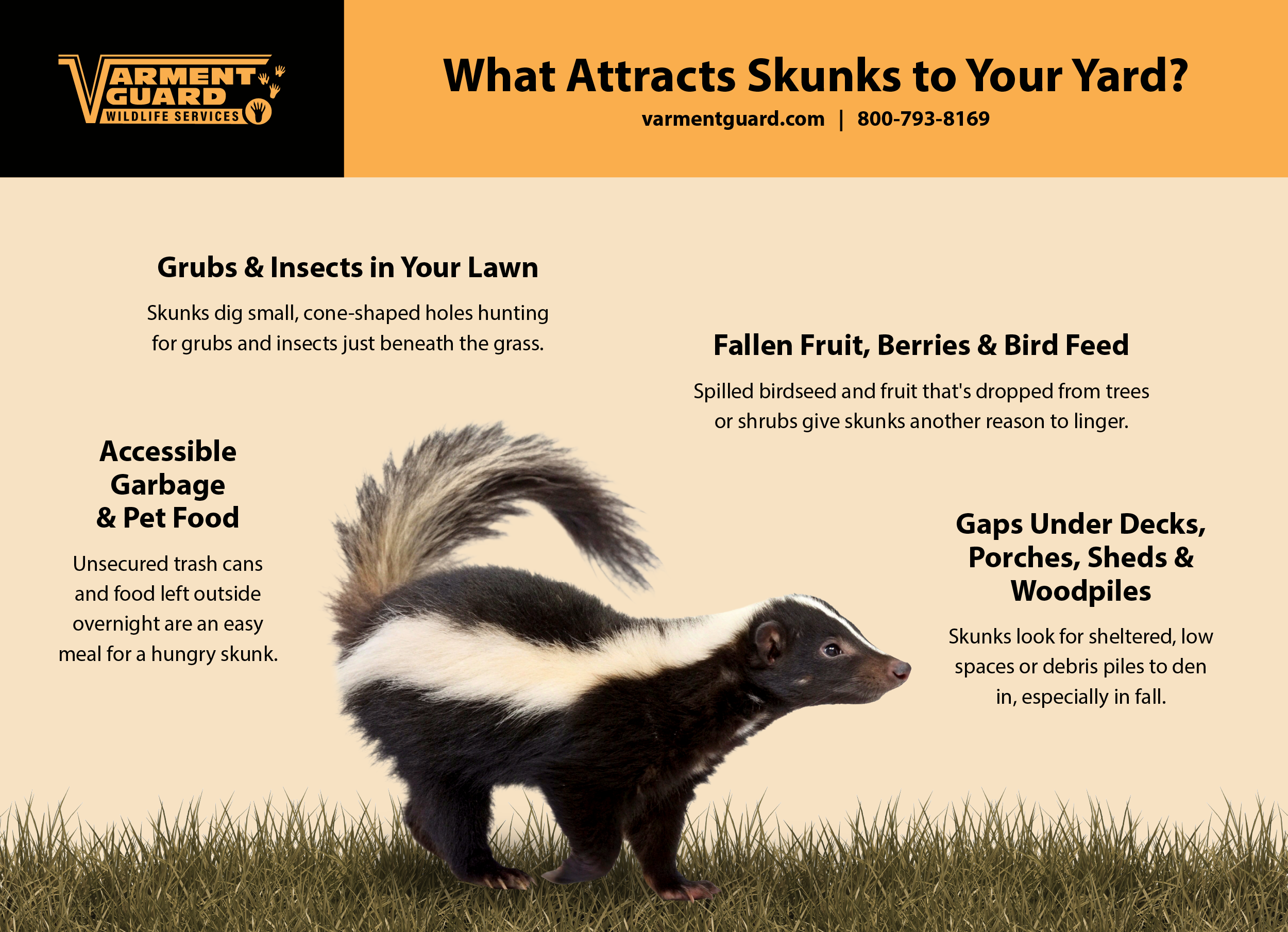
Skunks are enticed to build their burrows anywhere they feel safe and where they can get food easily. They’re particularly attracted to thick foliage for cover and easily accessible garbage for food. Skunks also dig up grubs from lawns as a major source of sustenance. If you see small, cone-shaped holes in your yard, they could be left behind by skunks.
What Time of Day Are Skunks Most Active?
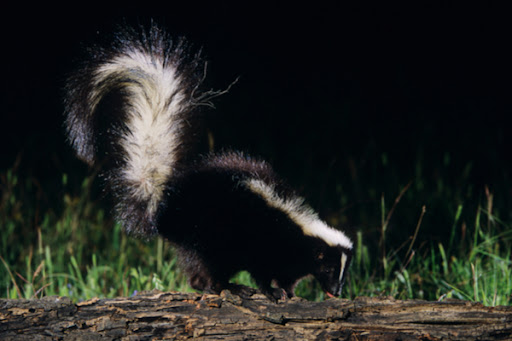
Skunks are nocturnal. They spend their days hunkered down in their burrows and come out at night to forage for food. They’ll usually make their way to the nearest garbage or grub source and dig in. Even at night, they'll take the most concealed, sheltered path possible on their way to and from food. They also tend to take the same routes repeatedly, because they have bad eyesight.
Do Skunks Hibernate?
No, skunks don’t hibernate. However, they can enter long, hibernation-like periods of inactivity called “torpor.” During torpor, they rest inside their burrows for long periods of time and survive on stores of fat. Skunks enter torpor during cold winters and re-emerge either in spring or on particularly warm winter days. They're more active in spring and fall, when it’s cool enough for them to move around without overheating.
How Can I Avoid Being Sprayed by a Skunk?
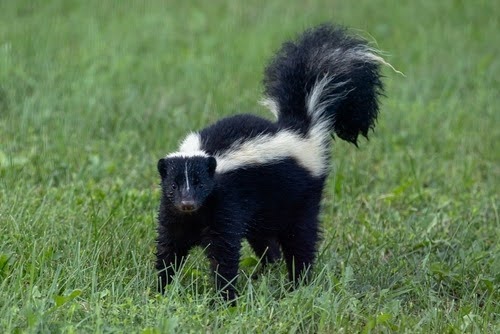
Skunks spray when they feel threatened or startled. Contrary to popular belief, it’s actually relatively difficult to get a skunk to spray you. In most circumstances, if you stay out of their way, they’ll stay out of your way.
Never corner, threaten, or otherwise bother a skunk, even if it’s near your home. If you see a skunk, stay out of its way and, if necessary, call in the pros.
After coming out of torpor, skunks are usually sluggish and even less aware than usual. If you accidentally approach a skunk, it might spray in surprise when you startle it. Avoid this unfortunate scenario by giving skunks and skunk burrows a wide berth.
How Do I Keep Skunks Away From My Home?
Try your best to limit their access to food and shelter. Here’s how:
1. Screen Off Low Shelters
Around homes, skunks dig under porches, decks, stairs, sheds, and mobile home entrances very frequently. These areas provide them with existing overhead cover that helps them feel secure.
Varment Guard uses chicken wire or wire mesh fencing to restrict skunk access to these locations. To make sure skunks don’t dig beneath it, we dig the mesh several inches under the structure.
2. Eliminate Hiding Spots
Skunks rely on cover to move around your property unseen. Brush piles, fallen branches, overgrown shrubs, and landscaping that sits up against your home all give them a sheltered path to food and potential burrow sites.
Keep your lawn clear of branches, leaves, and debris year-round, and trim shrubs and ornamental plants so they don't touch your home's exterior. The more exposed skunks feel, the less likely they are to settle in. A clear perimeter helps deter other wildlife, too.
3. Secure Garbage
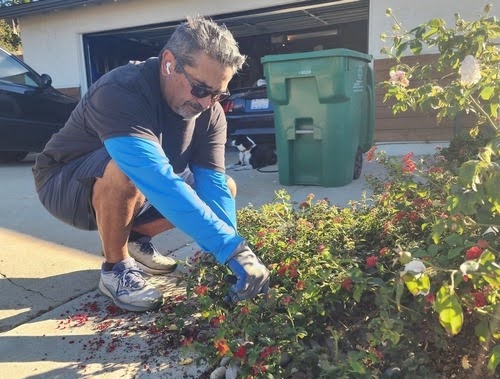
Skunks will climb inside or knock over garbage cans to get at any food material left inside.
There are several ways to secure your garbage from skunks:
- Keep all garbage in airtight, sealed plastic bags.
- Rinse out food and beverage containers before you throw them out.
- Secure the lid of your cans or dumpsters themselves when you’re not using them.
4. Remove Food Sources
Grubs are a skunk's favorite food. Skunks will dig into your lawn, or even roll back sections of turf, to reach them, and they'll also dig for earthworms and roots. Grub activity near the surface peaks in spring and fall, which is when lawn damage from skunks is most common. Keeping your lawn healthy through regular maintenance makes it less hospitable to grubs, and treating an active grub problem removes one of the biggest reasons skunks visit.
Skunks aren't picky, though. They'll also eat bird seed, fallen fruit, berries, nuts, and pet food left outside. Clean up these food sources regularly so your yard has less to offer.
Get Rid of Skunks With Varment Guard
If you see a skunk burrow on your property, don't try to remove it yourself. You risk getting sprayed, and DIY removal rarely solves the problem. Instead, get in touch with Varment Guard. Our specialists safely and humanely remove skunks and seal off the areas they're using for shelter, so they don't move back in. Call 800-793-8169 today.