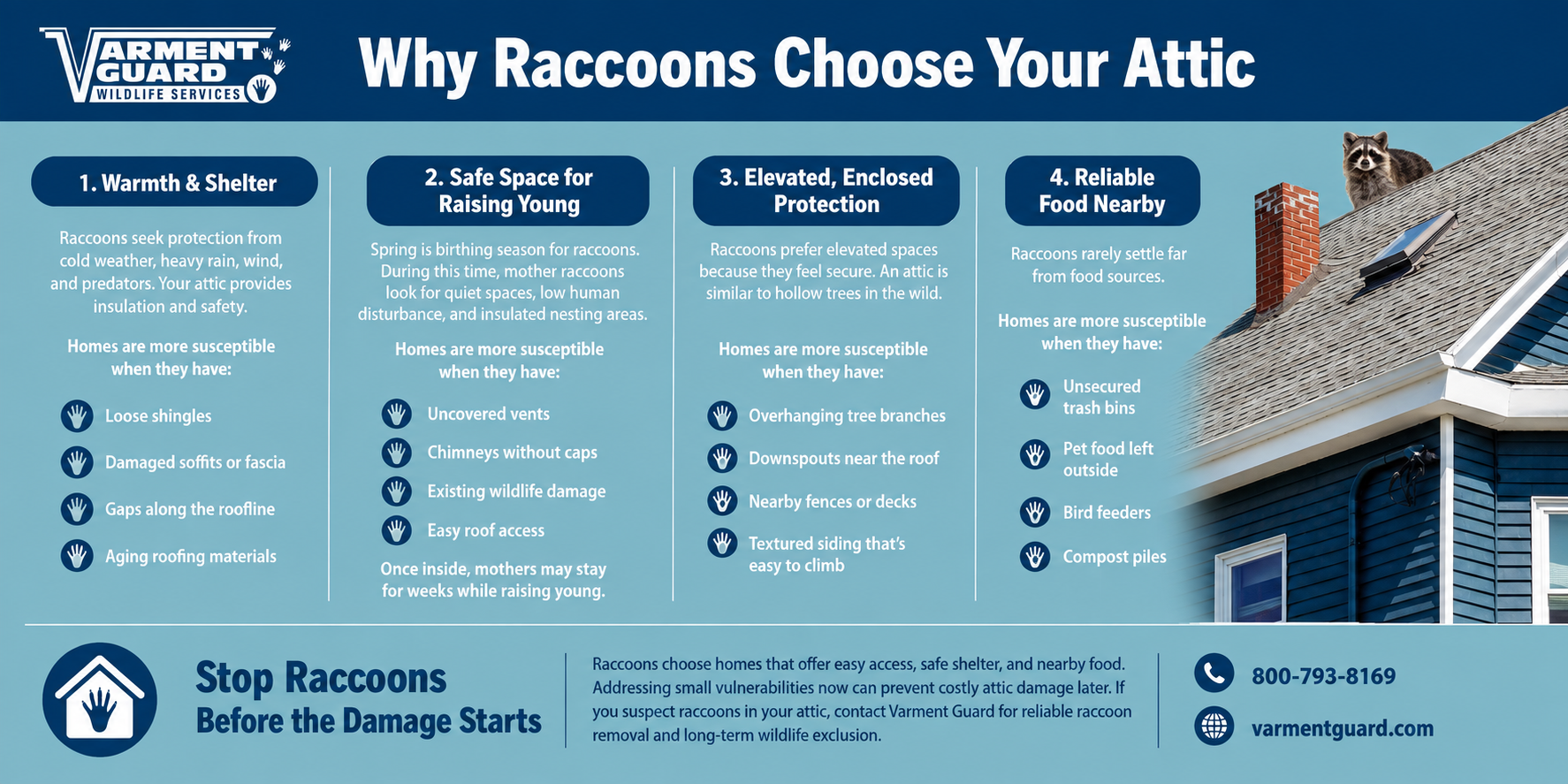
If you’re hearing scratching, thumping, or heavy footsteps overhead in your home, you may have a few unwelcome house guests. Once raccoons are inside, your home becomes a warm, protected denning site (especially during birthing season). During spring, raccoons look for warm, enclosed areas to build nests. And your attic is a perfect spot.
So, how do raccoons get into attics in the first place? And what do you do once they’ve set up shop upstairs? The more you know about these masked bandits, the easier it’ll be to keep them out of your space.
Common Signs of Raccoons in the Attic
1. Raccoon Noises in the Attic
- Heavy thumping at night
- Rolling or dragging sounds
- Vocal chattering (especially during baby season)
Raccoon noises are typically louder than squirrel or mouse activity due to their size.
2. Raccoon Poop in the Attic
Raccoons create designated “latrine areas.” Raccoon droppings are larger than most wildlife and may contain visible debris. Accumulated waste can damage insulation and create odor issues.
.jpg?r=FdOueI58iLk=)
Raccoon feces on floor
3. Other Warning Signs
Torn or disconnected ductwork is a common issue, as raccoons often shift or rip flexible air ducts while building nesting areas. You may also notice crushed, displaced, or contaminated insulation. Raccoons will compress insulation for bedding and leave behind droppings and urine, which can create health concerns and reduce your home’s energy efficiency.
Exterior damage can also point to a raccoon problem. Visible roof damage—such as loose shingles, bent vents, or pulled-back soffits—may indicate where raccoons have forced their way inside. Inside the home, a strong, musky odor is another red flag. These smells are often caused by urine, droppings, or nesting materials accumulating in enclosed attic spaces.
How Do Raccoons Get Into the Attic?
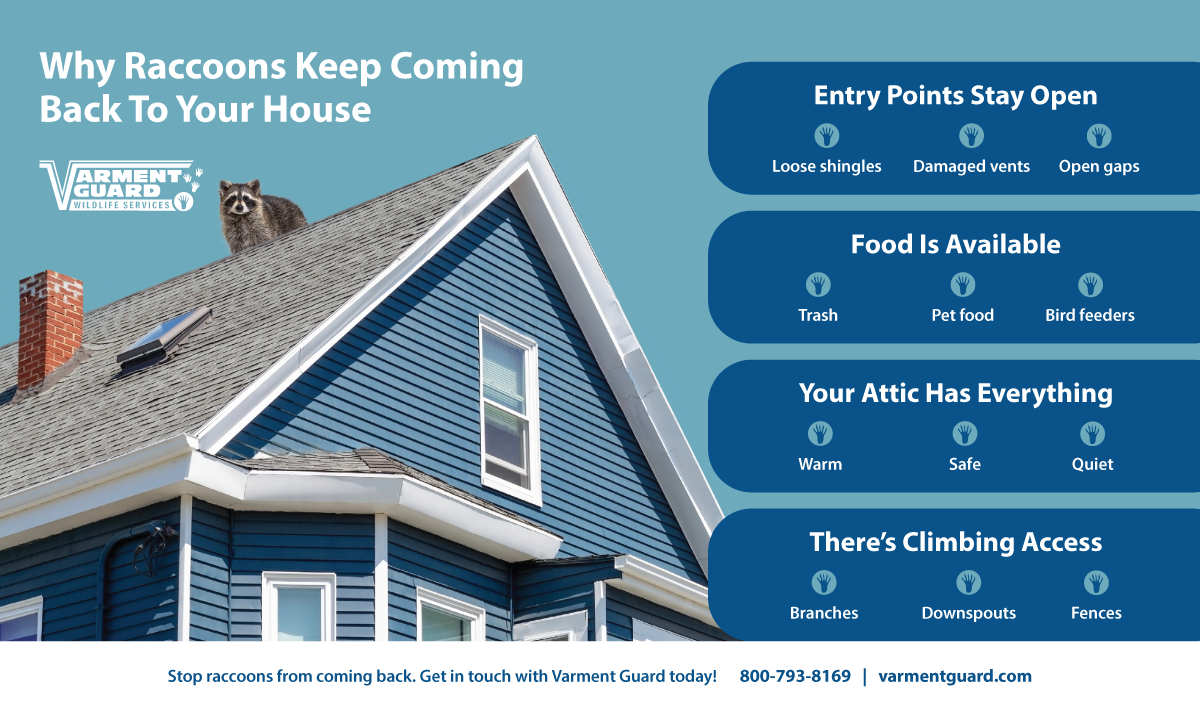
Raccoons are strong, intelligent climbers with surprisingly nimble paws. They can easily scale brick, siding, corner boards, and even downspouts to reach your roofline. Once there, they look for vulnerable areas to exploit.
Common entry points include weakened soffits and fascia boards, loose shingles, chimneys, roof vents, and attic fans. Raccoons are capable of prying open vents or tearing through soft building materials to create an opening. In some cases, they only need a gap as small as four inches to squeeze inside. What may look like minor exterior wear to a homeowner can be an open invitation to wildlife seeking shelter.
.jpg?r=q4iSNRhe5Eo=)
Chimney cap to prevent wildlife entry
Which Homes Are Most Vulnerable?
Homes are more likely to experience raccoon intrusion when they have:
- Aging or damaged roofing materials
- Uncovered or unsecured attic vents
- Gaps along rooflines, soffits, or fascia boards
- Overhanging tree branches that allow easy roof access
- Quiet, undisturbed attic spaces suitable for nesting
- Previous wildlife damage or unsealed entry points
- Nearby food sources such as unsecured trash, pet food, or bird feeders
If your home has had a raccoon issue in the past, it may remain at higher risk without proper wildlife exclusion. Entry points that were not professionally sealed can be reopened, and lingering scent markers may attract new animals.
Are Raccoons in the Attic Dangerous?
Yes. Raccoons in your attic can cause serious problems. They may:
- Damage wiring, which is a fire risk
- Contaminate insulation
- Introduce parasites
- Carry diseases such as rabies
During birthing season, a female raccoon may aggressively defend her young. This makes DIY removal particularly unsafe.
.jpg?r=5U59FsrMXUU=)
Raccoon mother with her babies
Can an Animal in the Attic Get Into the House?
In some cases, yes. Raccoons can push through ceiling materials, damaged drywall, or vent openings. A raccoon in house situations can escalate quickly if the animal gains access to interior living spaces. If you have a raccoon or another type of wildlife in your home, get in touch with professional wildlife control right away.
.png?r=i1iD8gPjIlQ=)
How to Get Raccoons Out of the Attic
Many homeowners want to get raccoons out of attic spaces themselves. Unfortunately, DIY attempts often:
- Separate raccoon mothers from babies
- Cause raccoons to relocate deeper into the structure
- Lead to additional property damage Lead to additional property damage
- Put the homeowner in an unsafe position
Instead, it’s best to get help from a professional wildlife control company, like Varment Guard. Our raccoon removal services include:
- Comprehensive attic and roof inspection
- Identification of active and potential entry points
- Humane trapping or eviction methods when appropriate
- Safe removal and relocation of young, if present
- Removal of raccoon droppings and contaminated materials
- Sanitization and deodorization of affected areas
- Durable sealing of gaps, vents, and structural vulnerabilities
- Long-term wildlife exclusion to help prevent future entry
Don’t Ignore the Noises in Your Attic. Call Varment Guard
Hearing scratching or thumping in your attic is not something to ignore. Raccoon problems rarely resolve on their own, and the longer they remain, the greater the risk of structural damage, contamination, and costly repairs.
If you need humane raccoon removal from attic spaces, Varment Guard Wildlife Services is ready to help. Schedule your inspection today and keep wildlife where it belongs, in the wild.